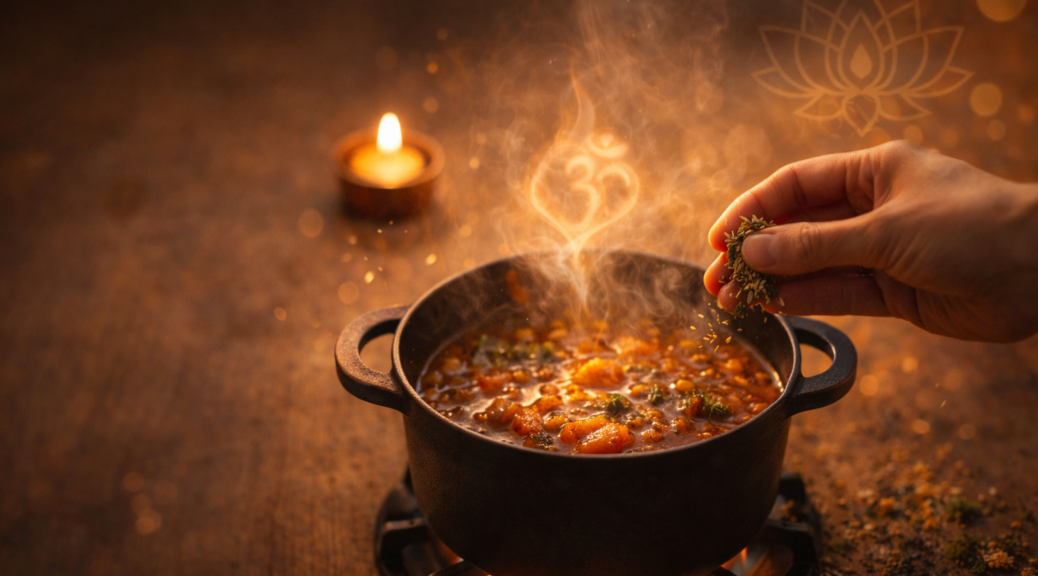
The Fire Element: from spark to service
When I teach Food Yoga, I often say: fire is the transformer. It’s the heat that turns raw into tender, intention into action, and an ordinary kitchen into a tiny temple. In the Vedic map of the self, our gross body is made of five elements—earth, water, fire, air, and ether—and the subtle and spiritual layers ride on top of that foundation.
What fire does in you
Fire shows up as digestion, metabolism, courage, and the will to follow through. In practical terms, if your inner fire is strong, you usually digest well and can handle a raw salad at midday when the sun is high; if your fire is low—especially in the evening—you’ll do better with a spicy, hot soup that supports digestion. Common sense and your body’s feedback are the guides.
Ayurveda also observes that each food carries an elemental “signature.” People heavy in the earth element (steady but sometimes sluggish) benefit from more fire and air foods to mobilize energy. The art is balancing the four elements on the plate to spark positive change.
A small devotional detail from my monastic days: in traditional Indian cuisine we ate with the right hand—the hand of fire—because touch awakens digestion and presence. It’s a simple way to invite warmth and awareness into a meal.
Feeding your inner flame (without burning out)
Choose fire-forward plants. In my Sacred Foods list, herbs like coriander and fennel carry a pronounced fire reaction; black cumin is also rated as fire. Sprinkle, brew, or toast them to gently kindle the system.
Time your raw. Midday raw works best when your constitution already has good fire; evenings tend to favor cooked, warming meals.
Balance passion. If your temperament runs hot—quick to react—cool it with water-element foods and a calmer soundscape while you cook and eat.
The spiritual meaning of fire
There’s a reason every tradition gathers around a flame. When we offer our work in love, ordinary action takes on the quality of fire—it’s purified and becomes service. I’ve described it like placing a cold iron rod into a blazing fire: the rod takes on the fire’s heat and light. In the same way, dedicated action takes on a higher vibration.
The Gītā’s promise is wonderfully simple: “If one offers Me with love and devotion a leaf, a flower, fruit, or water, I will accept it.” Cooking, like any act, becomes sacred when it’s an offering, not an ego project.
A 7-minute Fire Ritual (kitchen edition)
Light & breath. Before you cook, pause for three slow breaths and light a small candle—remembering the transformer you’re invoking.
Warm the pot with love. Toast a pinch of coriander or fennel to wake their fragrance, then build your meal around grounding grains and fresh vegetables.
Offer. When the food is ready, close your eyes for a moment and silently offer the meal. Let intention be the heat that finishes the dish.
When the fire is too low—or too high
Too low: sluggish, cold, unmotivated. Favor fire foods and warm, spiced soups; eat earlier; keep phones and heavy media out of the kitchen so your attention can act like a steady flame.
Too high: irritable, overheated, driven. Add water-element foods, finish with soothing herbal tea, and take your meals in a calm, uncluttered space.
Fire is the quiet courage to show up and the bright mercy that transforms whatever it touches. Tend it wisely—on your plate, in your breath, and in your service—and let it turn everyday life into a steady offering.


