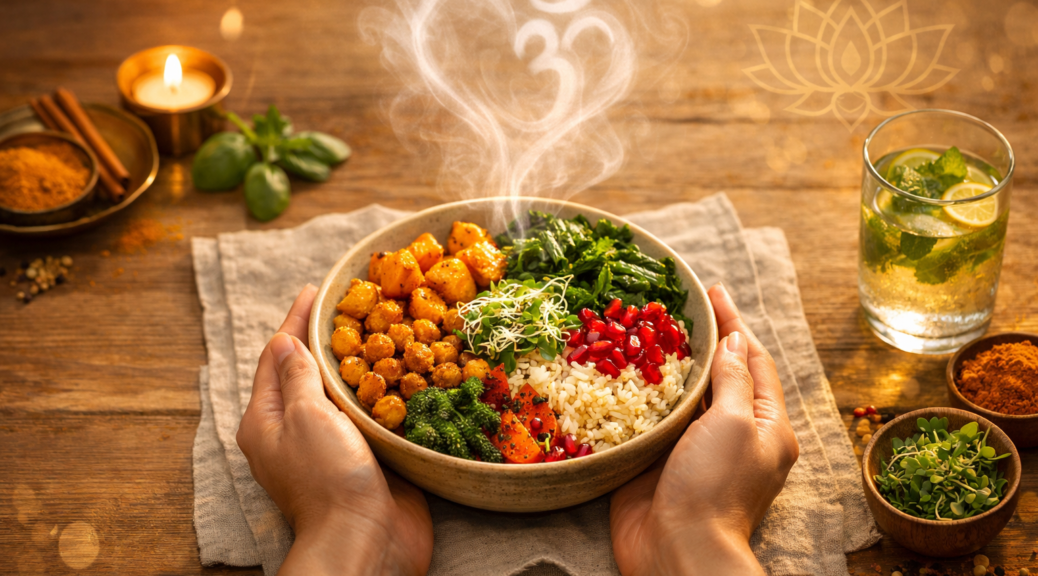
Food Yoga: turning every meal into a prayer (and a quiet revolution)
Let me take you back to a smoky refugee camp kitchen where we had more hungry faces than pots of rice. I remember the knot in my chest loosening only when I surrendered the outcome and focused on service—cooking as worship, offering what we had with love, and trusting the rest to the Divine. That inner shift is the heartbeat of Food Yoga: show up, cook with care, offer with love, and let grace do the heavy lifting.
What is Food Yoga?
Food Yoga is spiritual hospitality in action—using clean, plant-based meals to nourish body, mind, and soul, and to remind us we’re one family. In my workshops I began calling the lifestyle a “Prasadarian” path: choose food that’s free from harm and negativity, prepare it with loving intention, and offer it before eating. Prasadam literally means “mercy”—food cooked and offered in love, then shared.
At its core is a simple social truth from the Vedic lens: every sentient being shares the same spiritual quality. We’re seemingly divided by species and labels, but in essence we’re interdependent and inseparable. Hospitality becomes a bridge—not a brand.
Why plants, prayer, and intention?
Three reasons:
It heals the planet and the body. A plant-based diet lightens our footprint and is consistently linked with better health outcomes. When we choose beans over beef, we choose breathable air, cleaner water, and a calmer heart.
It heals our consciousness. Think of prayer as medicine and sanctified food as the healing diet. We’re not just filling stomachs—we’re tuning vibration. Intention matters. Clean kitchens and clean hearts are the recipe.
It includes everyone. “No one should miss out on the experience of prasadam.” Feed widely, without discrimination—snacks in offices, meals at festivals, plates at shelters. Food Yoga is a social change movement disguised as a feast.
The element behind every bite
Ayurveda sees food as alchemy. Each ingredient carries an elemental signature—earth, water, fire, and air—that interacts with your unique constitution and the time and place you eat. Balance those elements and the meal works on your body, your mood, and your spirit all at once.
That’s why not every meal should be raw, and not every person needs the same plate. Cold evening? Choose a warming soup (fire). Feeling heavy and stuck? Add light, expansive foods (air). Cooking for a fiery personality? Soften the menu with water-element foods. This is common-sense consciousness in the kitchen.
Vibration is real (your water knows)
If our bodies are mostly water and water responds to the energies around it, then the sounds, moods, and media we bathe our meals in change us. Cook and eat in uplifting vibration and the food carries that song. It’s practical mysticism: what surrounds the pot surrounds your heart.
The Food Yoga ritual (3 steps you can do today)
1) Center & clean.
Begin with a breath and a tidy space. Excellence isn’t fancy—it’s pure. Clean hands, clean counters, clean mind. Let your intention be service.
2) Cook for someone you love (including you).
Design an alchemically active plate:
Earth (roots/grains) to ground.
Water (soups/steamed veggies) to soothe.
Fire (spices like ginger or cinnamon) to awaken.
Air (greens/sprouts) to lift.
As you stir, remember why you’re cooking. Love is the secret spice.
3) Offer & share.
Before serving, pause. Offer the meal in gratitude—silently or with a simple prayer—and then share it. When we dedicate our action, the ordinary becomes sacred; cooking turns from ego-task to soul-practice.
“But I’m just making dinner…”
Perfect. Food Yoga isn’t about saffron robes; it’s about sincerity. The mother who ladles stew with a blessing is doing Food Yoga. The student who shares a hummus wrap with a lonely classmate is doing Food Yoga. The volunteer who smiles as they serve a plant-based plate in a shelter is doing Food Yoga. The kitchen is your temple; the ladle, your bell of mindfulness.
A gentle challenge
This week, try one Prasadarian meal: plant-based, cooked cleanly, balanced by elements, offered with love, and shared with someone—human or animal friend. Notice how your mind feels afterward. Then repeat. Meal after meal, we re-member who we are: souls in a human kitchen, practicing unity one plate at a time.
When we feed others with this spirit, we don’t just fill bellies; we elevate the room. That’s Food Yoga: a quiet revolution that begins where you stand—apron on, heart open.
GET YOUR COPY
OR physical copy at foodyoga.org
FAQs
Q: What is the concept behind Food Yoga?
A: Food Yoga combines cooking and spirituality, using plant-based meals to nourish the body, mind, and soul. It emphasizes intention, love, and community while preparing and sharing food.
Q: How can I practice Food Yoga at home?
A: You can start by cleaning your cooking space, preparing a meal with love, and sharing it with someone. Focus on the intention behind your cooking and how it connects you to others.
Q: Why is a plant-based diet important in Food Yoga?
A: A plant-based diet promotes better health and environmental sustainability. It reduces our ecological footprint while providing nourishing meals that can be shared widely, embodying the spirit of community and inclusiveness.


